


Key Takeaways
- CFD simulation is a computer method that predicts how air, heat and refrigerant move through a space, so engineers can test a bus HVAC design before any hardware is built.
- Every CFD analysis follows the same four stages: building a 3D model, splitting it into tiny cells, running the calculations and reviewing the results.
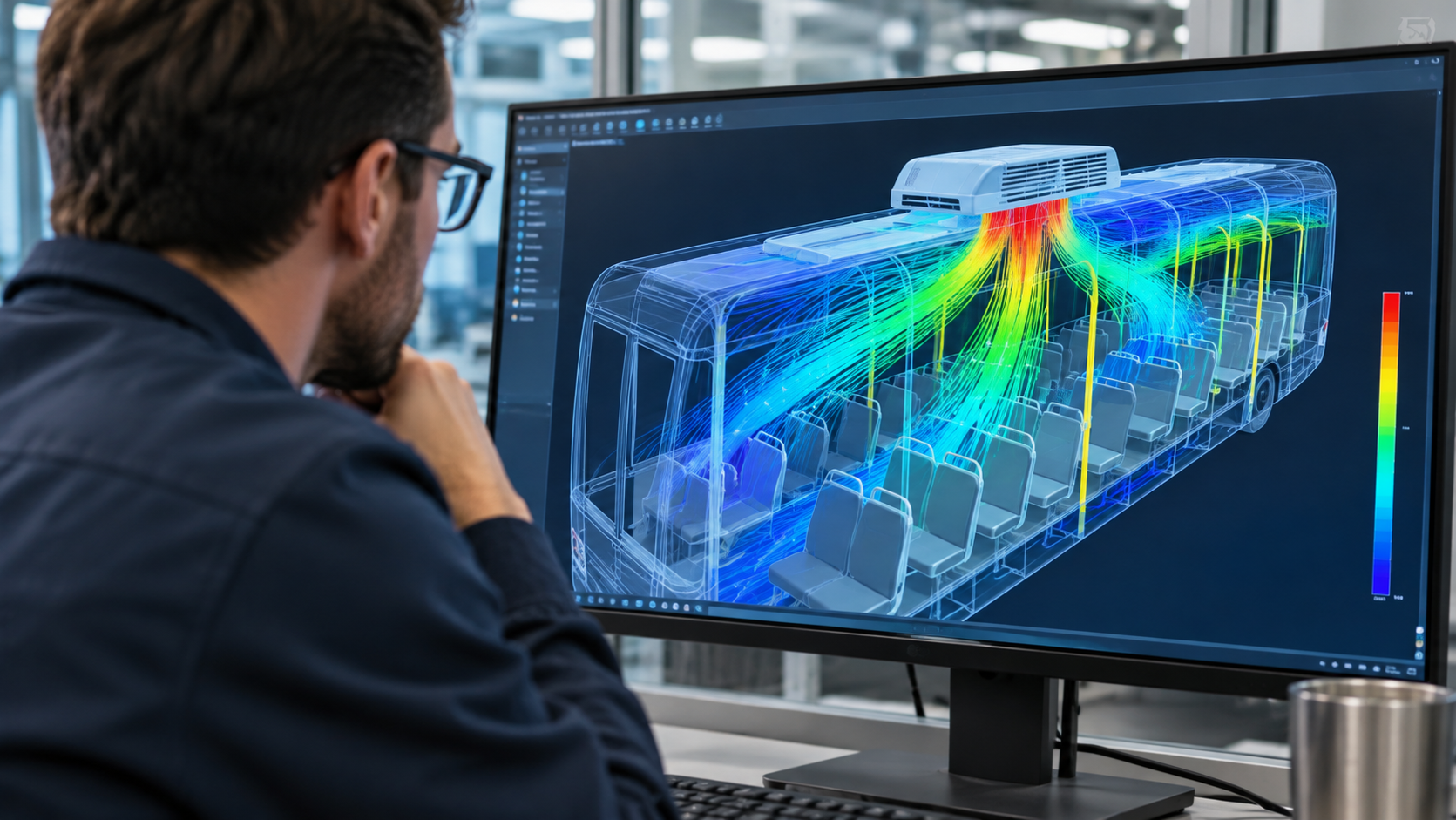
- In a bus, CFD shows where conditioned air actually travels, which seats run warm or cold, and how quickly the defroster clears the windshield.
- Simulation works best alongside physical testing, because a climate chamber confirms what the model predicts under real operating conditions.
- Bus Climate Control (BCC) pairs CFD and finite element analysis with in-house chamber testing, which lets OEMs refine a climate system while design changes are still inexpensive.
Every bus has to keep its driver alert and its passengers comfortable, whether it's a freezing morning or a packed summer afternoon. Engineers used to achieve this mostly by building prototypes, testing them and rebuilding them. Today, much of that work happens earlier on a computer, using a method called CFD simulation.
CFD simulation is a computer model that shows how air moves and carries heat through a space, such as a bus cabin. CFD, short for computational fluid dynamics, splits that space into millions of tiny cells and calculates the airflow in each one. The result is a detailed picture of where the air goes, how fast it moves and how warm or cool it is.
That matters because a bus is a hard space to keep comfortable. It has a long cabin, big windows, doors that open at every stop and a passenger count that changes all day. When the airflow is right, the back row feels as comfortable as the front, the windshield stays clear, and an electric bus uses less battery power for heating and cooling. CFD lets engineers see all of this at once, which no thermometer or test drive can do.
At Bus Climate Control (BCC), CFD is the first step in our HVAC engineering services for buses. It helps OEMs see how a climate system will perform long before a prototype is built.
This guide walks through what CFD simulation is, how a CFD analysis runs step by step, where it makes the biggest difference in bus HVAC design and how it works alongside real-world testing.
What Is CFD Simulation and How Does It Work?
Think of CFD as a virtual wind tunnel for the inside of a bus. Engineers build a digital copy of the cabin, and the software works out how air would move through it using the same physics that govern real air. The result shows how a stream of cool air leaves a ceiling vent, slows down, warms up around passengers and flows back to the air conditioning unit.
The idea has been around longer than most people expect, and the first computer models of airflow date back to the 1950s and 1960s. What's changed is computing power, which now lets engineers model an entire 40-foot bus cabin in detail.
The Four Stages of a CFD Analysis
Every CFD analysis, whether it covers a single blower wheel or a complete vehicle, moves through the same four stages:
- Build the model: Engineers create a 3D model of the bus cabin, including the seats, ducts, vents and HVAC unit, and leave out small details that don't affect airflow.
- Split it into cells: The air space inside the model is divided into millions of tiny cells, called a mesh, with the smallest cells placed where air changes quickly, such as around vents and fans.
- Set the conditions and run it: Engineers enter real-world conditions, such as the outdoor temperature, the strength of the sun and how much air the system blows, and the software calculates how air behaves in every cell.
- Review the results: The answers are turned into colour maps and airflow diagrams that show air speed and temperature at every seat, vent and window.
A simulation can show a snapshot, such as how the cabin feels once the system has settled, or a timeline, such as how long a cabin takes to cool down after a bus has been parked in the sun.
Choosing the Right Level of Detail
Air coming out of a vent doesn't travel in a straight line. It swirls and tumbles, a bit like smoke rising from a candle. Most HVAC simulations estimate the overall effect of those swirls instead of tracking every one, which gives reliable answers without days of computing time. Engineers save the slower, more detailed methods for specific questions, such as reducing fan noise.
What Is a CFD Analysis Used For in Bus HVAC Design?
CFD answers questions that would otherwise take weeks of prototype builds and test runs, and these are the areas where it adds the most value.
Cabin Airflow and Passenger Comfort
The main goal of any bus climate system is even, draft-free comfort from the front row to the back bench. CFD shows where the air from the vents actually lands, where it stalls into warm pockets and where it blows too hard on someone's neck. Engineers can then adjust where the vents sit, which way they point and how much air they deliver, until the whole cabin feels about the same temperature.
Duct and Vent Design
Long ducts tend to deliver more air to the outlets nearest the fan and less to those at the far end. A CFD model shows that imbalance in detail, so engineers can reshape the ducts and give every passenger a fair share of air without needing a bigger fan.
Defrost and the Driver Area
A clear windshield is a safety requirement, and it depends on warm, dry air reaching the glass at the right speed and angle. CFD helps engineers shape defroster outlets so they clear the full sweep of the windshield quickly.
Rooftop Units, Condensers and Coils
CFD also helps outside the cabin. As a rooftop air conditioning unit cools the bus, it pushes hot air out into the open. CFD shows where that hot air goes, so engineers can make sure the unit isn't pulling its own hot air back in, which keeps cooling strong even when the bus is stuck in summer traffic.
Electric Bus Thermal Management
On an electric bus, the batteries and electrical parts also need to stay at the right temperature, and they draw on the same battery power as the heating and cooling. Simulation helps engineers balance cabin comfort against battery temperature, which is central to the range work behind BCC's climate control solutions for electric, hybrid and hydrogen buses.
CFD, Thermal Simulation and FEA: How Do They Differ?
CFD is one member of a family of simulation methods, and the table below shows how the most common ones compare in a bus HVAC program.
| Method | What it predicts | A typical bus HVAC question |
|---|---|---|
| CFD (computational fluid dynamics) | CFD predicts how air and refrigerant flow and how that flow carries heat. | Does every seat receive enough conditioned air on a full summer route? |
| Thermal simulation | Thermal simulation predicts how a space heats up or cools down over time. | How quickly does the cabin warm up on a cold winter morning? |
| Conjugate heat transfer | Conjugate heat transfer looks at airflow and at heat moving through solid parts, like the roof and windows, in one model. | How much heat does the sun push through the roof and glass into the cabin? |
| FEA (finite element analysis) | FEA predicts how parts bend, shake and hold up under force. | Will a rooftop unit bracket hold up to years of road vibration? |
| Multiphysics simulation | Multiphysics simulation looks at several of these effects at once, because in real life they affect each other. | How does road vibration affect how well a cooling coil works? |
Finite element analysis and CFD are often run side by side on the same project. CFD tells engineers whether a design will keep passengers comfortable, and FEA tells them whether that design will survive the road.
How Accurate Is CFD Compared With Physical Testing?
A CFD model is only as good as the information that goes into it. If the starting conditions or the level of detail are off, the results will be too, which is why CFD tools have always been checked against wind tunnels and real-world tests. A well-built model gets close to reality, and a physical test shows exactly how close.
For that reason, BCC runs simulation and testing as one loop instead of two separate steps. BCC's climate chambers for full-size buses can hold temperatures from -40°F to 131°F, control humidity from 20 to 90% and apply a 7,500 W solar load to vehicles up to 60 feet long. When the test results match the simulation, engineers know they can trust the model for the next design, and any difference shows exactly what needs a closer look.
What Are the Benefits of HVAC Simulation Before Prototyping?
The biggest benefit of simulation is timing. A design change made on screen costs hours, while the same change made once parts are in production can cost weeks and a second round of testing. These are the gains OEMs see most often:
- Fewer prototypes to build, because the first physical build already reflects several rounds of virtual testing.
- Faster comparison of options, since engineers can test many vent layouts, duct sizes or unit positions in the time one prototype would take to build.
- Visibility into problems that sensors miss, such as a dead zone of still air above the rear seats or hot air circling back into a rooftop unit.
- Better fit with OEM production schedules, because questions about fitting the HVAC system into the bus get answered before it reaches the assembly line.
What Software Is Used for CFD Analysis in HVAC?
Engineering teams use commercial and open-source CFD packages such as Ansys Fluent, Simcenter STAR-CCM+, COMSOL Multiphysics and OpenFOAM, and each can model HVAC airflow well. The engineer matters more than the software, because realistic inputs, the right level of detail and checking against real test data are what turn a colourful picture into a trustworthy design decision.
Bring CFD Into Your Next Bus Program With BCC
Bus Climate Control's engineers use CFD, FEA and multiphysics analysis to refine airflow, comfort and durability early, then confirm the results in climate chambers built for full-size vehicles. Explore BCC's HVAC engineering services or contact our team to see how simulation can help your next bus reach the road with confidence.
Frequently Asked Questions About CFD Simulation
What does CFD stand for in engineering?
CFD stands for computational fluid dynamics, a branch of engineering that uses computers to predict how liquids and gases flow and how they carry heat. Engineers use it to study everything from aircraft wings to heating and cooling systems. In bus HVAC design, CFD shows how conditioned air moves through ducts, vents and the passenger cabin, so engineers can improve comfort and efficiency on screen before building and testing physical prototypes in a climate chamber.
How long does a CFD simulation take?
The time a CFD simulation takes depends on the size of the model, how many cells it uses and whether it shows a single snapshot or a timeline of changes. A simple study of one vent or duct section can finish within hours, while a detailed timeline of a full bus cabin can run for a day or more on a powerful workstation. Most of the project time goes into building the model and checking results.
Can CFD predict passenger comfort on a bus?
CFD can predict the main factors behind passenger comfort, including air temperature, air speed and how evenly conditioned air spreads along the cabin. Engineers combine those results with comfort models that account for clothing and activity level to estimate how passengers will feel in each seat. The predictions are most reliable when they are checked against climate chamber measurements, which confirm that the model reflects how the real bus behaves on a hot or cold day.
What is the difference between CFD and FEA?
CFD and FEA answer different questions about the same product. Computational fluid dynamics predicts how air, refrigerant and heat move through and around a system, which makes it the main tool for airflow and comfort. Finite element analysis predicts how solid parts respond to forces, such as stress, bending and vibration, which makes it the main tool for strength and durability. Bus HVAC programs use both, often on the same component, such as a rooftop unit that must cool well and survive the road.
Does CFD replace physical testing?
CFD does not replace physical testing, and the two work best as partners. Simulation lets engineers explore many design options quickly and narrow them down to the strongest candidates. Physical testing in a climate chamber then confirms how the chosen design performs under controlled heat, cold, humidity and sun load. When test results and simulation agree, the model becomes a trusted tool for future changes, which shortens development time on the next project as well.